Serving Lake Jackson, TX
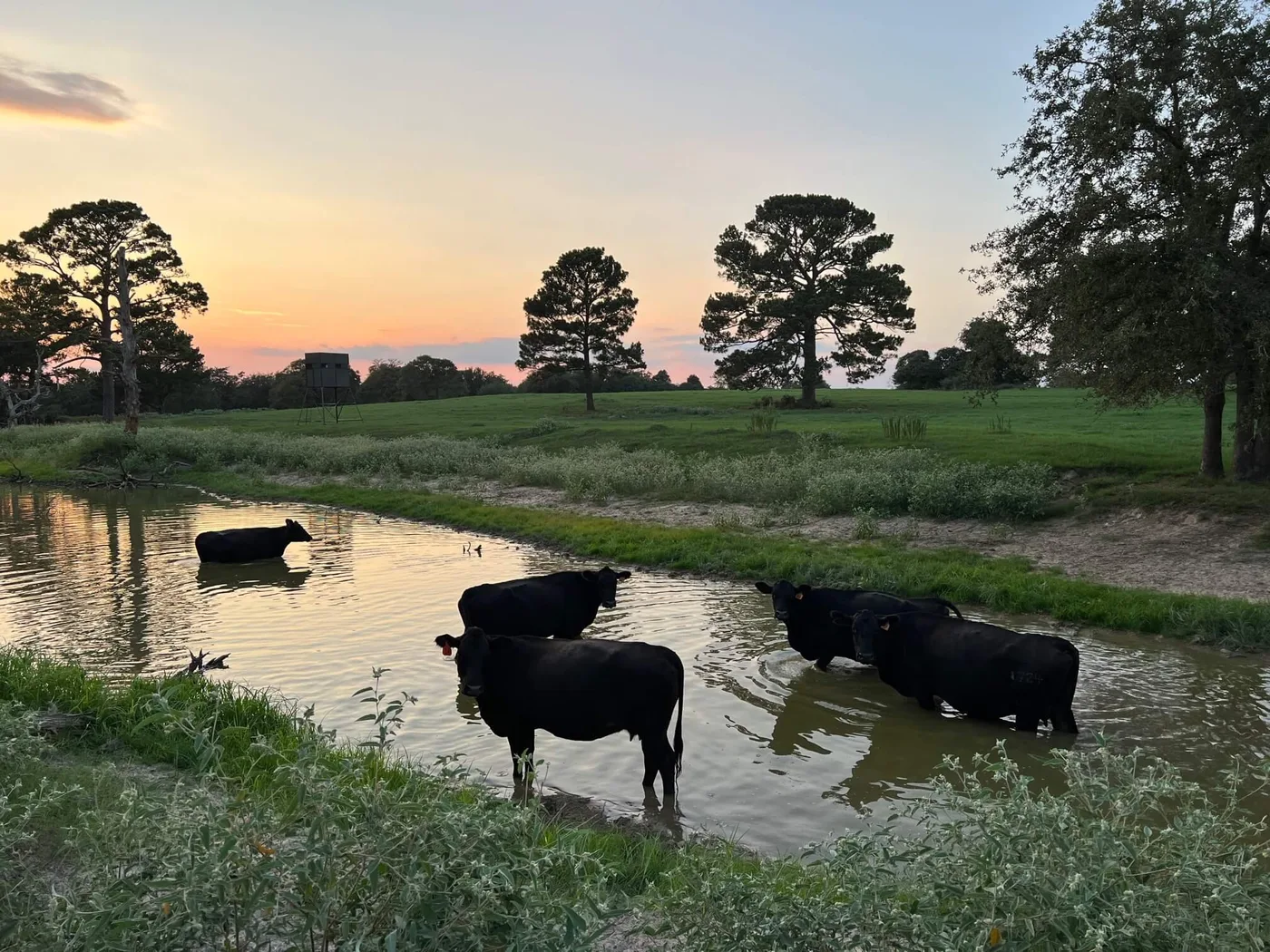
RLS Land Solutions builds ponds and lakes on acreage around Lake Jackson, Texas. We dig with excavators in the 50,000 pound class and larger. Spoil moves on our own tandem dump trucks. Most of this work sits inland of the city, out where tracts get big. That is the country north toward Angleton, west toward Brazoria and West Columbia, and along the Brazos bottom. Stock ponds for cattle, fishing ponds, and larger ranch lakes all run on the same equipment. Only the size and the schedule change. We have built ponds and lakes on private ranches across this part of Texas.
Brazoria County clay is a good starting point for holding water. The flood plain soils along the Brazos are deep clay that water moves through very slowly. That is the exact trait a pond wants. What changes tract to tract is where the water table sits and how the ground drains. Both are siting questions, and they are worth answering before the first bucket comes out. Our jobs start around $10,000, and a real pond clears that easily.
Tell us about your project — we’ll get right back to you.
Ponds want acreage, and acreage starts where the city stops. Tracts north toward Angleton and west toward Brazoria and West Columbia carry most of the ranch work here. So does the country along the Brazos and San Bernard bottoms. Inside Lake Jackson the lots are small and the drainage is already set, so pond work in town is rare. We site a pond where the ground naturally collects water and where the clay runs deep. A low draw that already holds after a rain is usually telling you something worth listening to.
Watershed comes first. A pond fills from the ground draining into it, so we look at what sits uphill and how much of it there is. Too little catchment and the pond runs low through a dry summer. Too much and the overflow has to be built for real water. Then we look at access, since an excavator and loaded trucks need a way in and out. Gates, fences and soft approaches all get sorted before machines come down Highway 36. Getting a machine stuck on the way in costs a day nobody planned for.
Down here the water table sits high, and it is a real siting factor. Brazoria County is known for dense clay and shallow groundwater. Lake Jackson itself is only about thirteen feet above sea level. Dig deep enough in the wrong spot and you are in water before the bottom is shaped. That is not always a problem. A pond catching groundwater can hold well through a dry stretch. It turns into a problem when the water arrives before the excavation is finished, because a wet hole is hard to shape and harder to compact.
So we test before committing. On tracts near the coast we dig test holes and watch what fills and how fast. That tells us the working depth and whether the dig runs wet or dry. From there we set depth and bank slope to what the ground will actually give. Rainfall and groundwater move on their own, and a pond's level follows them. What we put a number on is the dig itself: depth, slope and volume, based on what those holes show. On a big lake we phase the excavation around the wet season.
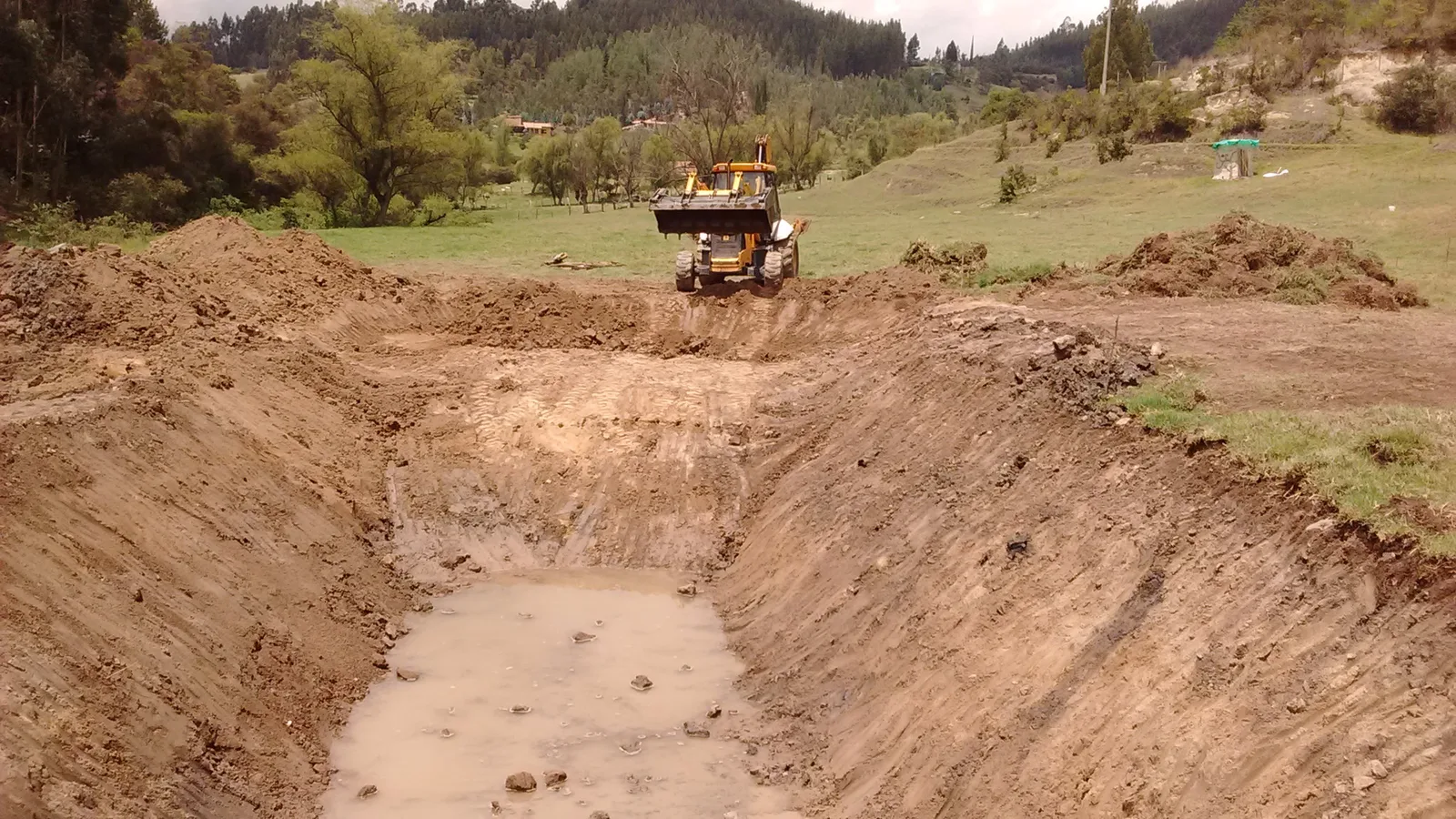
A pond is a dirt job with a shape. We strip the topsoil and set it aside, then cut the basin in passes. The deep end gets cut first, so water has somewhere to go while we work. Banks get sloped rather than cut straight, since a straight bank caves and it is dangerous for cattle. We leave a shallow shelf on one side where livestock or a dog can walk out. The dam or high side gets built from selected material and compacted in layers as it comes up.
Every pond makes dirt, and a lot of it. A one acre pond cut to eight feet moves on the order of ten thousand cubic yards. That spoil is worth something if you plan for it. On most ranch jobs we spread and shape it on site, filling low ground or building the pad for a barn or a house. When the tract has nowhere to put it, our trucks haul it out. Deciding that before the dig starts saves double handling, which is where pond budgets usually go wrong.
Free, no-obligation estimates throughout Brazoria County.
(281) 750-6510From the first look at the ground to the last pass of the grade, here is exactly how it goes.
We meet you at the property and read the job off the ground itself: what is growing, where water sits, how trucks and excavators get in. Big dirt work prices off what is really out there.
You get a free quote with a real number and a real plan: what gets dug or cleared, how many loads move, where the dirt comes from or goes. It holds unless the scope changes.
The equipment shows up when we said. Excavators dig, trucks run in rotation, and on deadline jobs we run shifts around the clock until the volume is moved.
The last pass matters as much as the first load. Pads compacted and holding elevation, ponds shaped and ready for water, ground graded so it drains. We look at the finished work with you before we leave.
What Lake Jackson property owners ask us most about ponds & lakes. Don't see yours? Give us a call — we're happy to help.
A pond you have been putting off, a pad that needs building, land that needs clearing, or a job that needs truckloads of select fill? Call or send the form. Tell us where the property is and what you want the land to do, and we will set a time to come look at it.
Tell us about your project — we’ll get right back to you.