Serving Lake Jackson, TX
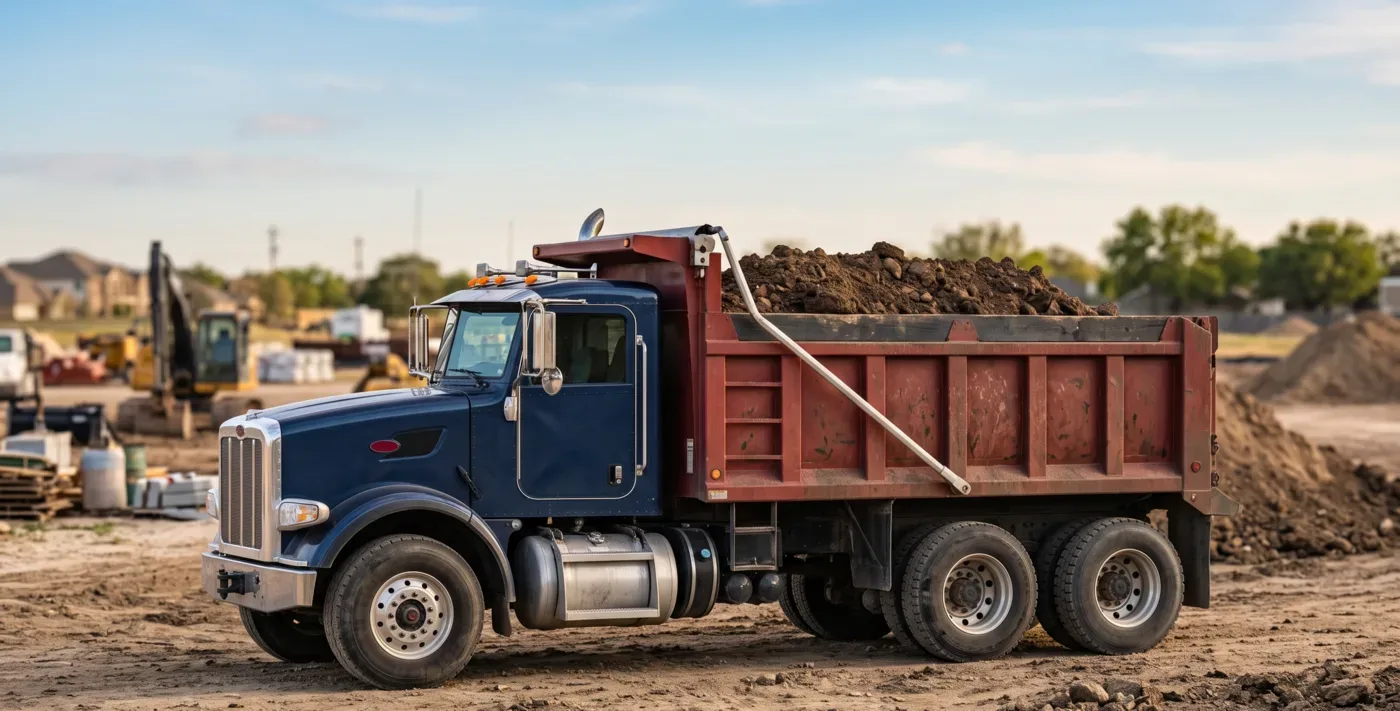
RLS Land Solutions does dirt work in Lake Jackson, Texas. That covers grading, land leveling, lot buildups and drainage work on building sites and acreage. Lake Jackson is flat and rests on heavy Brazos River clay. Water does not run off that ground on its own. It goes where the grade sends it, and if the grade sends it nowhere, it stands. Most dirt work here comes down to giving water a path and giving a building somewhere dry to sit. We run large excavators, dozer class equipment and our own tandem dump trucks.
Brazoria County has learned about water the hard way. Building sites here get judged on elevation and on where the runoff ends up. A pad sitting low is a problem for the life of the building. So is a lot that drains toward the property next door. Our end of that is the dirt: cut the fall, place the fill and compact it so it stays put. Most of what we do here is for builders and for people with acreage. Our jobs start around $10,000, since this is volume work.
Tell us about your project — we’ll get right back to you.
Flat ground and slow clay is the combination that causes trouble here. Rain does not soak into this soil. It runs across the top or it stands where it lands. On a lot with no fall, it stands against a slab, a driveway or a barn. Sitting water rots framing, softens subgrade and kills grass. The fix is shape rather than luck. We shoot grades across the site, find where water actually wants to go, and cut a path that gets it there.
That usually means swales, fall running away from the structure, and a tie in to whatever the site drains toward. Around Lake Jackson that is a roadside ditch, a creek arm or a maintained outfall. Oyster Creek and the bayou arms carry a lot of this ground. On acreage the same job looks different. It is pasture that ponds and roads that turn to soup after a week of rain. We cut fall, shape drains and pull the low ground up with fill. Balancing cut and fill on site keeps the truck count down.
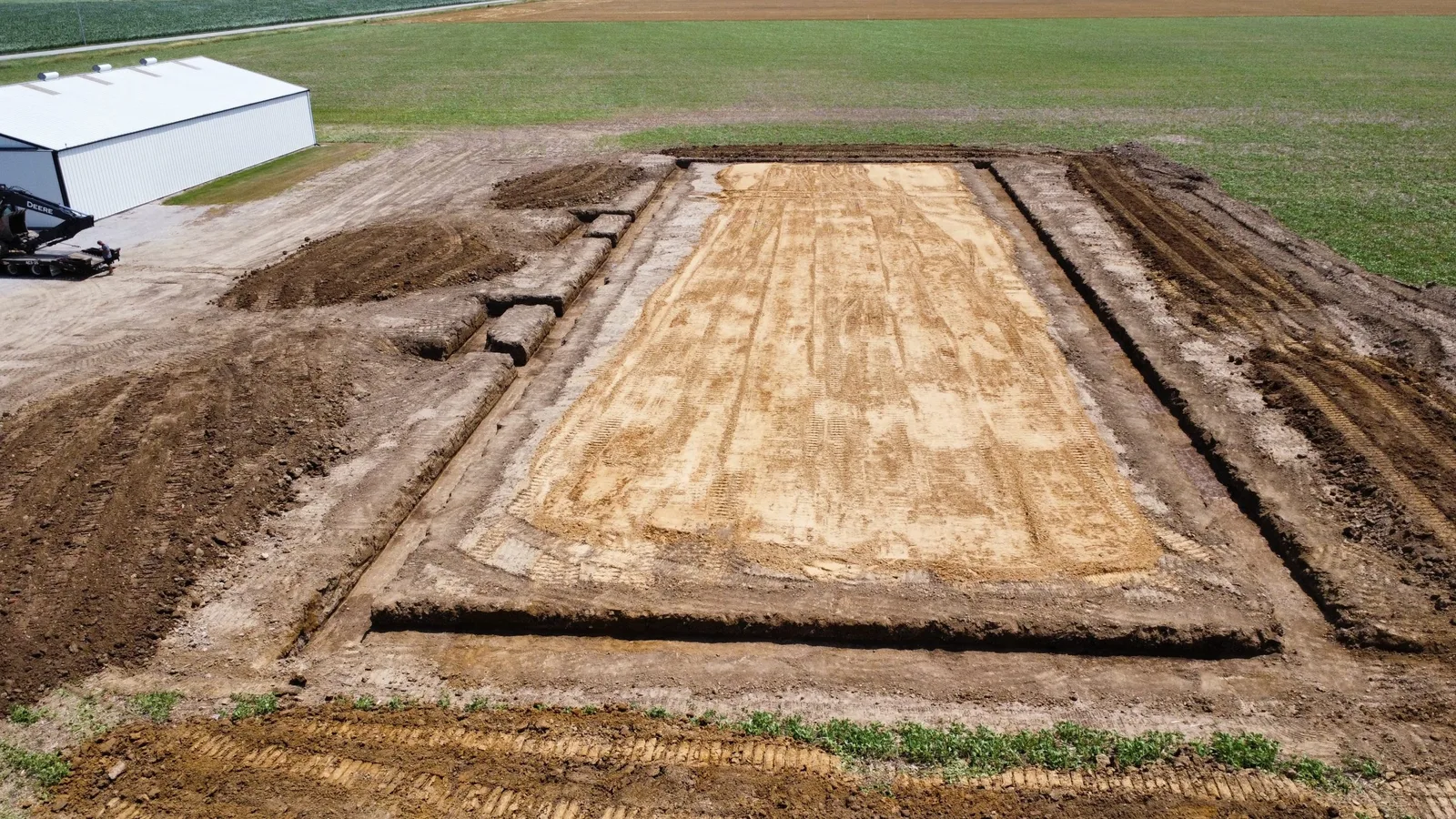
Raising a lot properly is a careful process run fast. Vegetation and topsoil come off first, because organic material under fill breaks down and settles. Then fill goes in in layers, usually eight to twelve inches at a time. Each layer gets compacted before the next one lands on it. Dumping deep loose fill and calling it a pad is the shortcut. It is also why some slabs are cracked by year three. Compaction is what turns a pile of dirt into ground that will carry a building.
Volume is the other half of it. An acre raised one foot is roughly sixteen hundred cubic yards before compaction, and compaction eats more. Owning the pits pays off right there. The fill comes off our own ground in Fort Bend County. It rides our own trucks down Highway 36 or 288. One outfit supplies it and places it, so the site is not waiting on a delivery that never shows. On a tight schedule we run around the clock. Finish grade goes on once the buildup reaches elevation.
Rough grading comes first, right after clearing. We knock the site down to a working plane, fill the holes and set the drainage pattern before anything gets built. Builders want a site that drains while they are working on it, since a muddy pad costs them days. On acreage, rough grading is also how pasture gets leveled for hay ground or for a barn site. Cut and fill get balanced across the tract wherever the dirt allows. We work in acres and set the machine count against the deadline.
Finish grading is the last pass, once the heavy work is done. We tighten the surface, hold the fall we planned and blend the site into what surrounds it. Around a new slab that means grade sloping away on every side. On a driveway or a ranch road it means a crown, so water sheds instead of ponding in the wheel tracks. Sandy loam goes on last where grass is going in. Then the site drains the way it was drawn instead of the way it settled.
Free, no-obligation estimates throughout Brazoria County.
(281) 750-6510From the first look at the ground to the last pass of the grade, here is exactly how it goes.
We meet you at the property and read the job off the ground itself: what is growing, where water sits, how trucks and excavators get in. Big dirt work prices off what is really out there.
You get a free quote with a real number and a real plan: what gets dug or cleared, how many loads move, where the dirt comes from or goes. It holds unless the scope changes.
The equipment shows up when we said. Excavators dig, trucks run in rotation, and on deadline jobs we run shifts around the clock until the volume is moved.
The last pass matters as much as the first load. Pads compacted and holding elevation, ponds shaped and ready for water, ground graded so it drains. We look at the finished work with you before we leave.
What Lake Jackson property owners ask us most about dirt work & grading. Don't see yours? Give us a call — we're happy to help.
A pond you have been putting off, a pad that needs building, land that needs clearing, or a job that needs truckloads of select fill? Call or send the form. Tell us where the property is and what you want the land to do, and we will set a time to come look at it.
Tell us about your project — we’ll get right back to you.