Serving Rosharon, TX
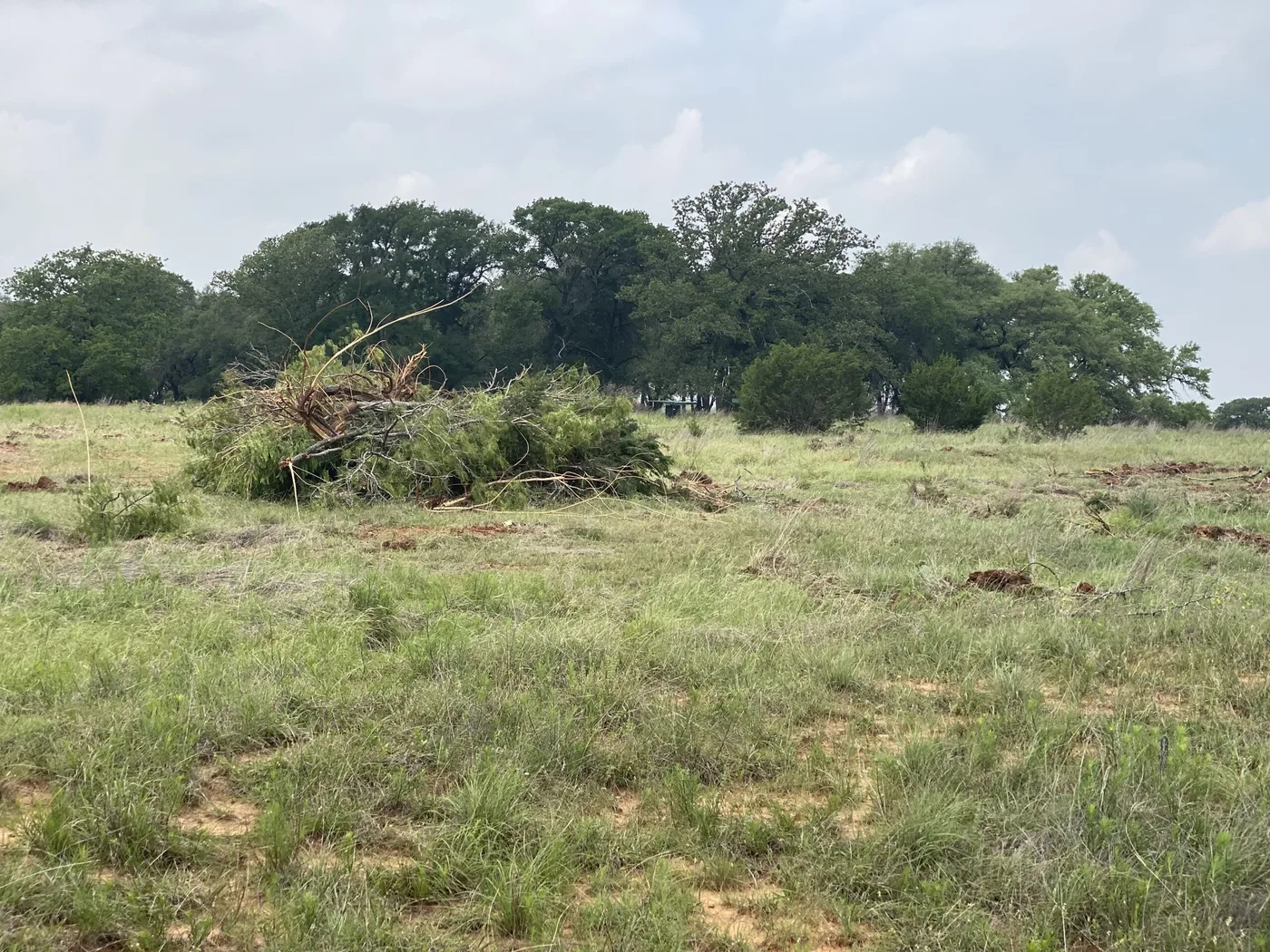
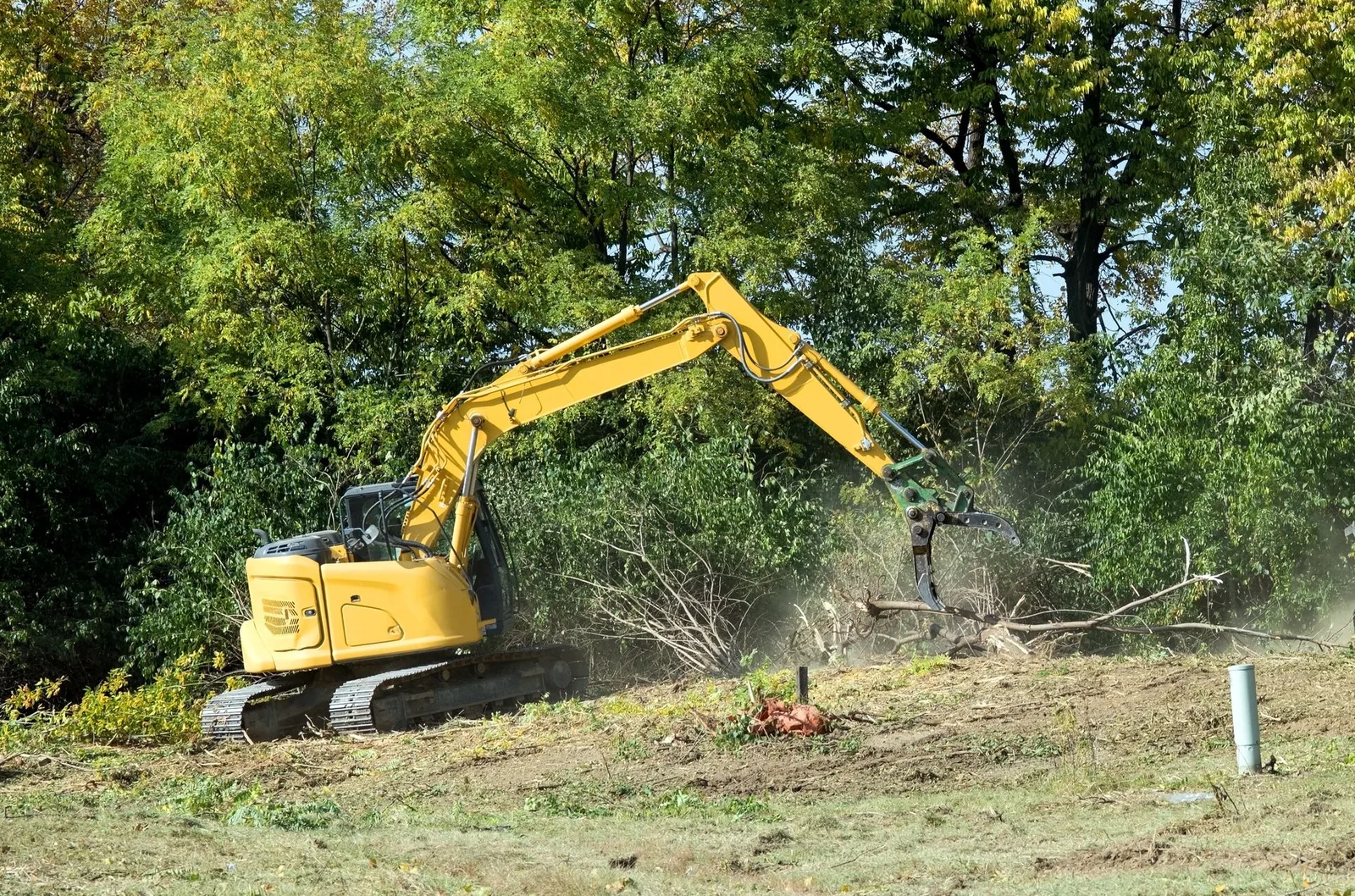
We do land clearing in Rosharon, Texas, on tracts that run in acres. Rosharon sits in northern Brazoria County, where FM 521 meets FM 1462. Ground out here was farmed for generations, and plenty of it stopped being farmed. Chinese tallow moves in fast on this coastal prairie, and yaupon fills the gaps under it. Fence lines thicken. Old pasture turns to brush in ten or fifteen years. West toward the Brazos, the timber gets heavier and the bottom stays wet. We clear it with large excavators and dozer-class equipment. Trees and brush get pushed out or dug out, then hauled off on our trucks.
Most land clearing calls here come from two places. An owner buys raw acreage off FM 1462 or FM 521 and needs a homesite opened up. A driveway and a building site usually come with it. Or a builder needs a tract stripped before dirt work starts. We size the equipment and truck count to the acreage. Our smallest excavators run about 50,000 pounds, and tandem dump trucks work behind them. Cleared material leaves on those trucks and goes to our own green waste dump site.
Tell us about your project — we’ll get right back to you.
Development keeps pushing south down SH 288. TxDOT has been widening the highway from Rodeo Palms toward CR 60, and rooftops follow the road. Tracts that sat in pasture for decades are getting bought and split. A lot of that ground has to be cleared before anything else happens. We take it in acres. Large excavators knock the timber down and pull root balls out of the ground. Dozer-class equipment windrows the material where we want it. Trucks stage on the road side and load from the windrow. The tract stays open behind us.
Clearing for a homesite works a little differently than clearing a whole tract. Most owners want a building site, a drive in from the road, and a yard opened around it. The rest of the acreage can stay wooded or get thinned. We mark the limits with the owner before anything moves. Trees worth keeping stay standing, and we work around them. On five-acre tracts like those in Suncreek Ranch, that plan matters. There is not much room to stage material. We keep the pile tight and haul it out as we go.
The Brazos runs about seven miles west of Rosharon. The far side of the county is hardwood bottom. Ground close to the river holds water long after a rain. Clearing down there takes weight and reach. Small machines bog. We bring excavators in the 50,000 pound class and heavier, and we track them on the drier lanes first. Timing helps. A dry stretch in late summer or winter opens ground that will not carry equipment in spring. The river gauge at the FM 1462 bridge tells us plenty. We plan bottom work around the river and the weather.
Fence lines are their own job. A line that has not been cut in years grows into a solid hedge of tallow and vine. Cattle cannot get to it, and you cannot see your own corner posts. We run an excavator down the line and pull it clean, roots included. Pasture reclamation works the same way at a bigger scale. Old rice ground that went out of production carries brush in the low spots and along the canal banks. We clear the whole field back to workable pasture and haul the material off.
Every clearing job produces a mountain of material. On a Rosharon tract, that pile is trunks, root balls, brush and dirt shaken off the roots. Hauling it matters as much as cutting it. We own a green waste dump site, so the loads go to our place instead of a commercial gate. That takes tipping fees out of the job and takes the guesswork out of the schedule. Trucks cycle on our own timing. On a big tract we keep several tandems running so the windrow never backs up the machines.
Burning is the other option on rural acreage. Out past the subdivisions, an owner can often burn the pile on site under county rules and the right conditions. That is cheaper than trucking on a big tract. We price both ways so you can pick. Either way, the material leaves the working area. What matters is what the ground looks like after. Root balls out, holes filled, surface knocked down and drivable. Most owners follow clearing with grading or a pad. We can roll straight into that with equipment already on site.
From the first look at the ground to the last pass of the grade, here is exactly how it goes.
We meet you at the property and read the job off the ground itself: what is growing, where water sits, how trucks and excavators get in. Big dirt work prices off what is really out there.
You get a free quote with a real number and a real plan: what gets dug or cleared, how many loads move, where the dirt comes from or goes. It holds unless the scope changes.
The equipment shows up when we said. Excavators dig, trucks run in rotation, and on deadline jobs we run shifts around the clock until the volume is moved.
The last pass matters as much as the first load. Pads compacted and holding elevation, ponds shaped and ready for water, ground graded so it drains. We look at the finished work with you before we leave.
What Rosharon property owners ask us most about land clearing. Don't see yours? Give us a call — we're happy to help.
A pond you have been putting off, a pad that needs building, land that needs clearing, or a job that needs truckloads of select fill? Call or send the form. Tell us where the property is and what you want the land to do, and we will set a time to come look at it.
Tell us about your project — we’ll get right back to you.