Serving Rosharon, TX
We do dirt work and grading in Rosharon, Texas. Rosharon sits on flat coastal prairie in northern Brazoria County, west of SH 288. Flat is the whole problem. There is very little natural fall, and the soil under you is clay that takes water in slowly. After a heavy rain, water sits in the yard, in the pasture and around the barn. Dirt work here is mostly about giving that water somewhere to go. We cut grade, shape swales, build ground up and tie the whole thing into a ditch. Large excavators and dozer-class equipment do the moving.
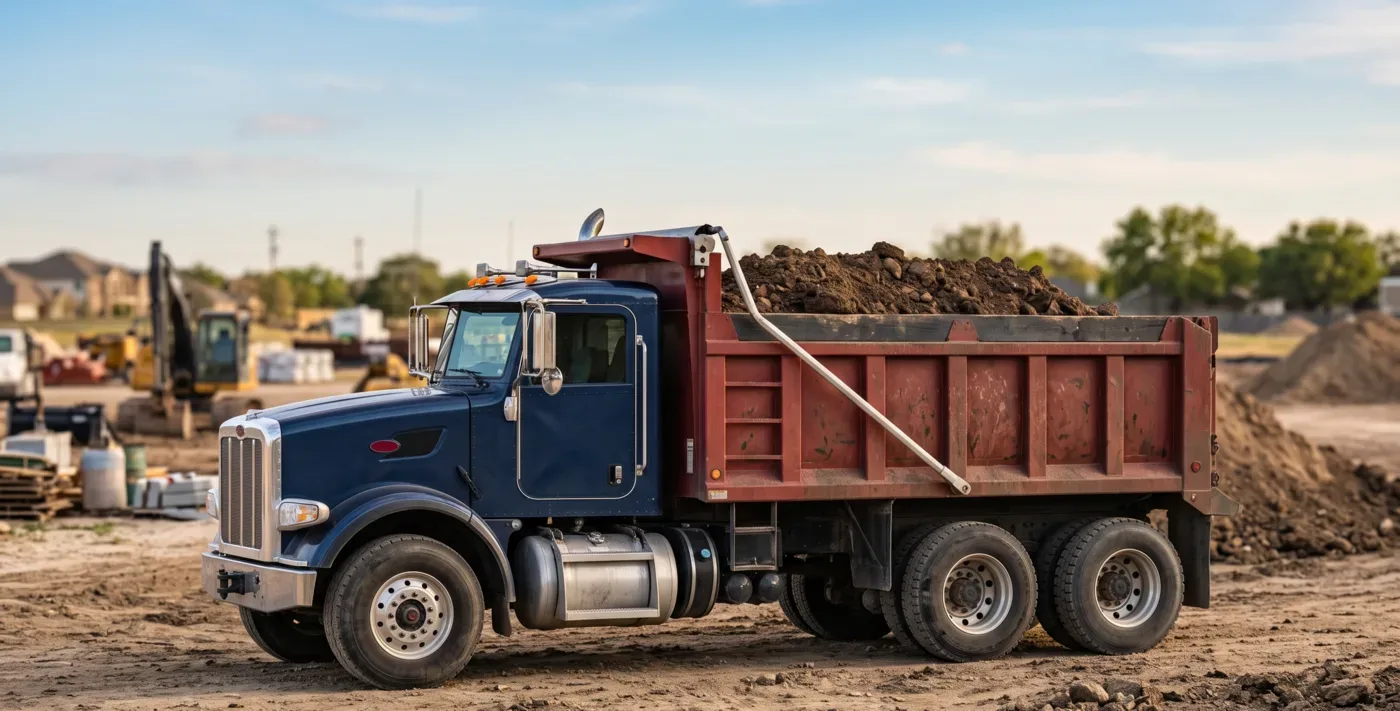
The other half of the work is elevation. New sections along 288 get built up before a slab is ever poured. Older places out on FM 1462 and FM 521 sit at the grade they were farmed at. Getting a homesite, a barn or a driveway above the water takes imported dirt and a plan for where it drains. We haul that fill from our own pits west of here. Dirt work projects start at about ten thousand dollars.
Tell us about your project — we’ll get right back to you.
Rosharon has almost no natural slope. The Brazos is seven miles west, and the prairie between here and there lies close to level. Water does not run off, it spreads and sits. Grading on this ground is a matter of inches. We shoot elevations across the site and find the lowest point the property can legally drain to. Then we work backward from there. Holding consistent fall over a few hundred feet is the actual work, and it is easy to get wrong by eye.
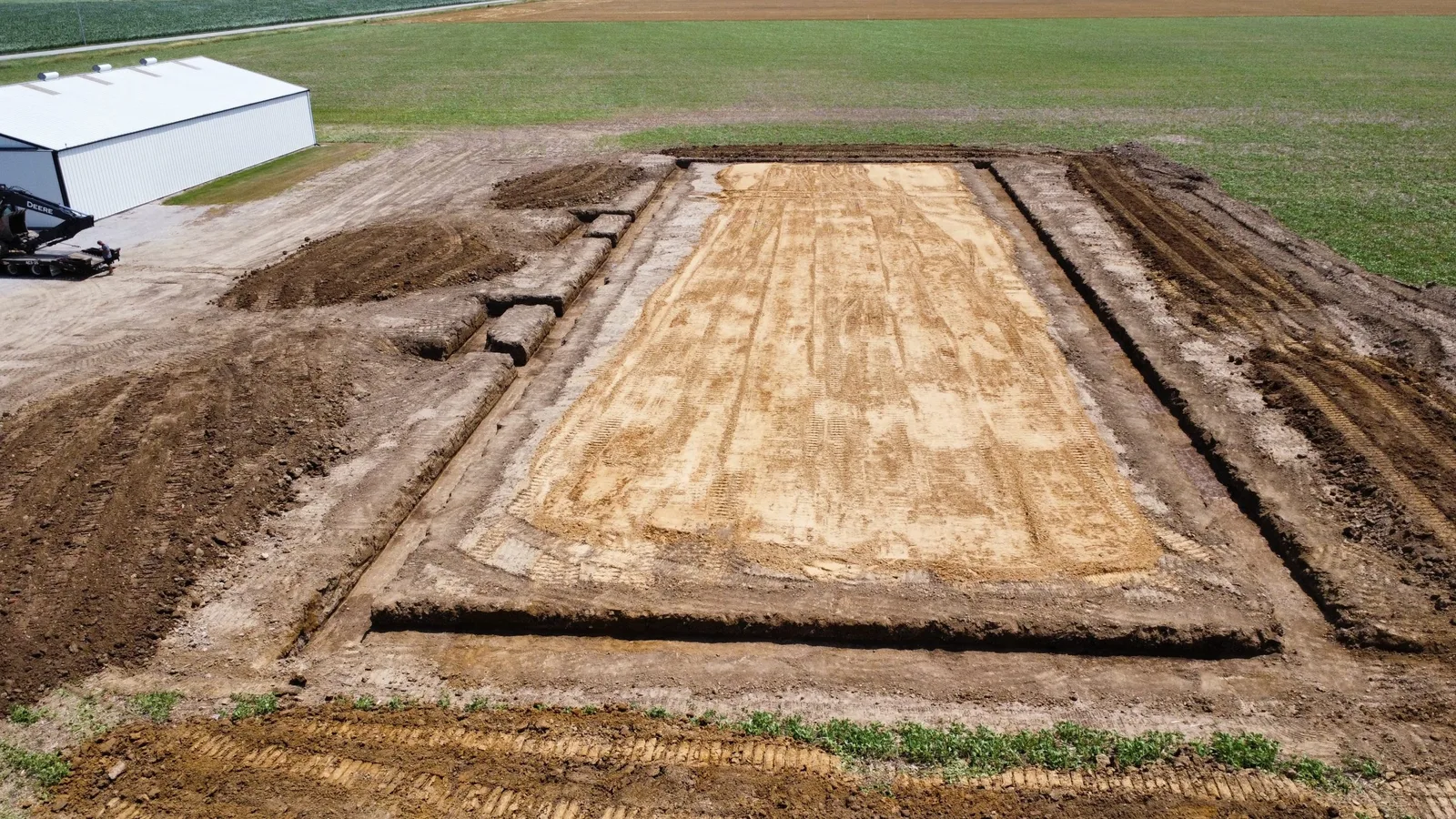
Most drainage jobs here take the same shape. Water leaves the roof and the slab, crosses the yard on a shaped grade, and enters a swale. The swale carries it to a road ditch or a drainage easement. Where a site has no fall at all, we build the high side up rather than dig the low side down. Digging a hole in flat clay just moves the puddle. On acreage, the same logic runs at a larger scale across pasture, pens and hay ground.
Raising ground is the answer when there is nowhere to drain. We bring select fill and general fill from our pits and build the site up in lifts. Each lift gets spread and compacted before the next one lands. The finished pad sits above the surrounding grade, and the grade around it carries water away. This is standard practice for new construction along the 288 corridor. It works the same way on an acreage homesite off FM 1462. Driveways and barn approaches get the same treatment on soft ground.
How high to build deserves real thought. We look at where water stood after the last big rain, at the road elevation, and at whatever flood maps apply to your tract. Ground near the Brazos and Oyster Creek floodplains gets treated with more care. The gauge at the FM 1462 bridge shows how high that river can run, and lowland flooding reaches the road at high stages. Building a foot or two higher costs dirt now and saves trouble later.
A lot of Rosharon ground was rice ground. Irrigation canals arrived here in 1935 and brought rice farming across this part of Brazoria County. Rice fields were built with levees and checks that held water in flooded blocks. When a field goes out of production, those levees stay. So do the canal banks, the turnrows and the old field ditches. Any of it will wreck a shredder and hold water in the wrong places for years.
We knock that ground back down to something usable. Levees get pushed into the checks they were built to hold. Old ditches get filled and the surface gets pulled level across the field. The ground then drains one direction instead of holding water in blocks. Hay ground, pasture and horse property all gain from the same work. Owners cutting acreage into homesites usually want it done before anything gets built on it.
Free, no-obligation estimates throughout Brazoria County.
(281) 750-6510From the first look at the ground to the last pass of the grade, here is exactly how it goes.
We meet you at the property and read the job off the ground itself: what is growing, where water sits, how trucks and excavators get in. Big dirt work prices off what is really out there.
You get a free quote with a real number and a real plan: what gets dug or cleared, how many loads move, where the dirt comes from or goes. It holds unless the scope changes.
The equipment shows up when we said. Excavators dig, trucks run in rotation, and on deadline jobs we run shifts around the clock until the volume is moved.
The last pass matters as much as the first load. Pads compacted and holding elevation, ponds shaped and ready for water, ground graded so it drains. We look at the finished work with you before we leave.
What Rosharon property owners ask us most about dirt work & grading. Don't see yours? Give us a call — we're happy to help.
A pond you have been putting off, a pad that needs building, land that needs clearing, or a job that needs truckloads of select fill? Call or send the form. Tell us where the property is and what you want the land to do, and we will set a time to come look at it.
Tell us about your project — we’ll get right back to you.