Serving El Campo, TX
RLS Land Solutions builds ponds and stock tanks around El Campo. Cattle operations out here have run tanks for as long as there have been cattle. Some are silted in. Some never held water right. Some places need a new one where the herd has moved. We dig with excavators that start at 50,000 pounds and haul spoil with our own tandem dump trucks. Wharton County clay is on our side for this work. It packs tight and holds water, which is why the old tanks around here worked. A pond here is a dirt job first. Get the dirt right and the water takes care of itself.
We are the Comparetto family, based in Needville, about 29 miles from El Campo. Fifteen years of this work includes ponds and lakes on private ranches. Sizes run from a working stock tank up to several acres of water. The dirt that comes out is part of the plan. It can build a levee, a road, a pad or a rise for a house. Our jobs start around $10,000, and most ponds clear that easily. Tell us the acreage you have and where the low ground sits.
Tell us about your project — we’ll get right back to you.
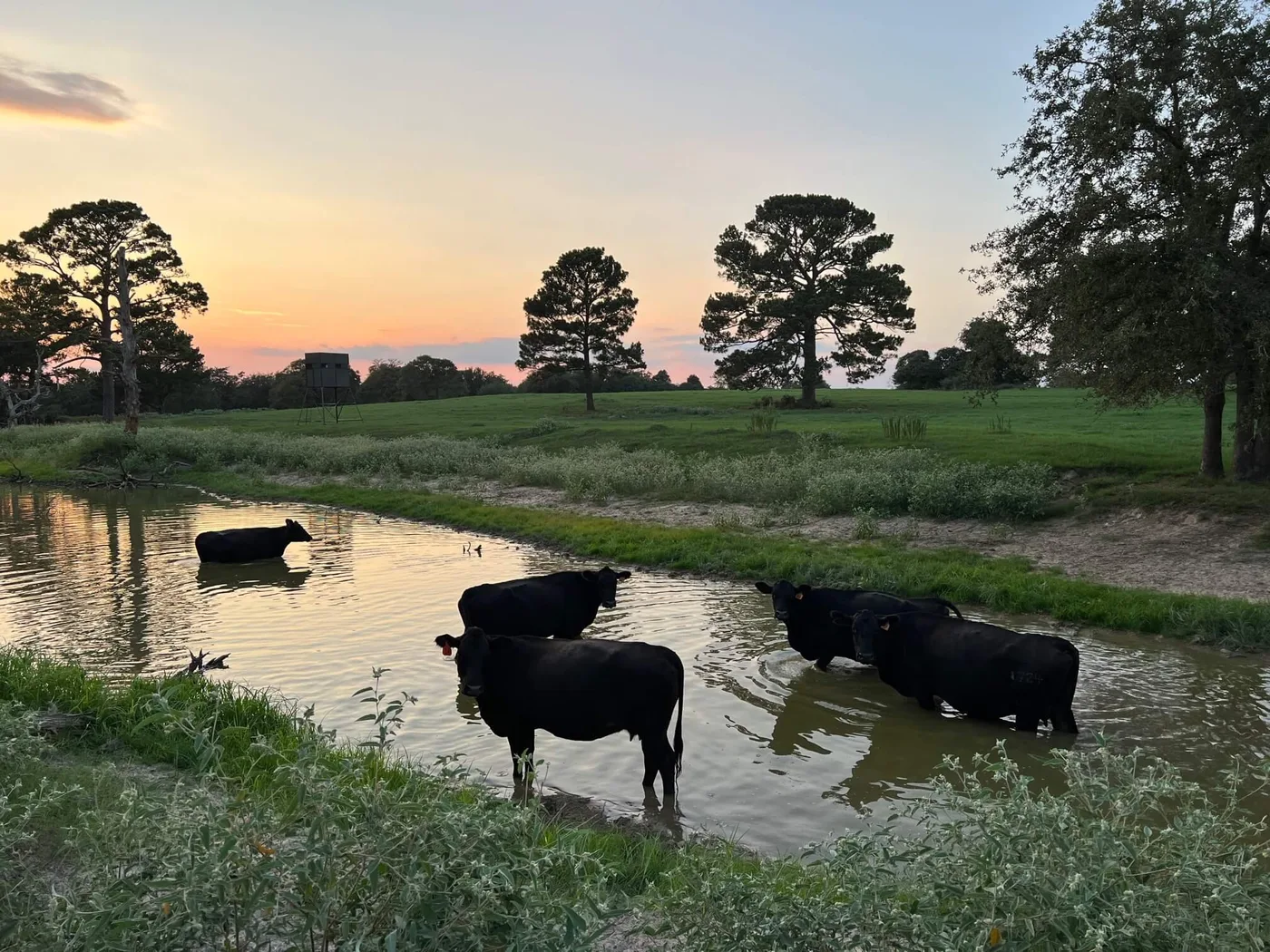
A stock tank has one job. It has to hold water through a dry August. Around El Campo that means depth more than surface area. A wide shallow tank loses water to the sun and grows up in weeds. A deeper tank with steeper banks holds longer and stays cleaner. We usually cut the deep end where the ground already falls. Then we shape the banks so cattle can get water without caving them in. One or two watering points work better than a soft rim all the way around.
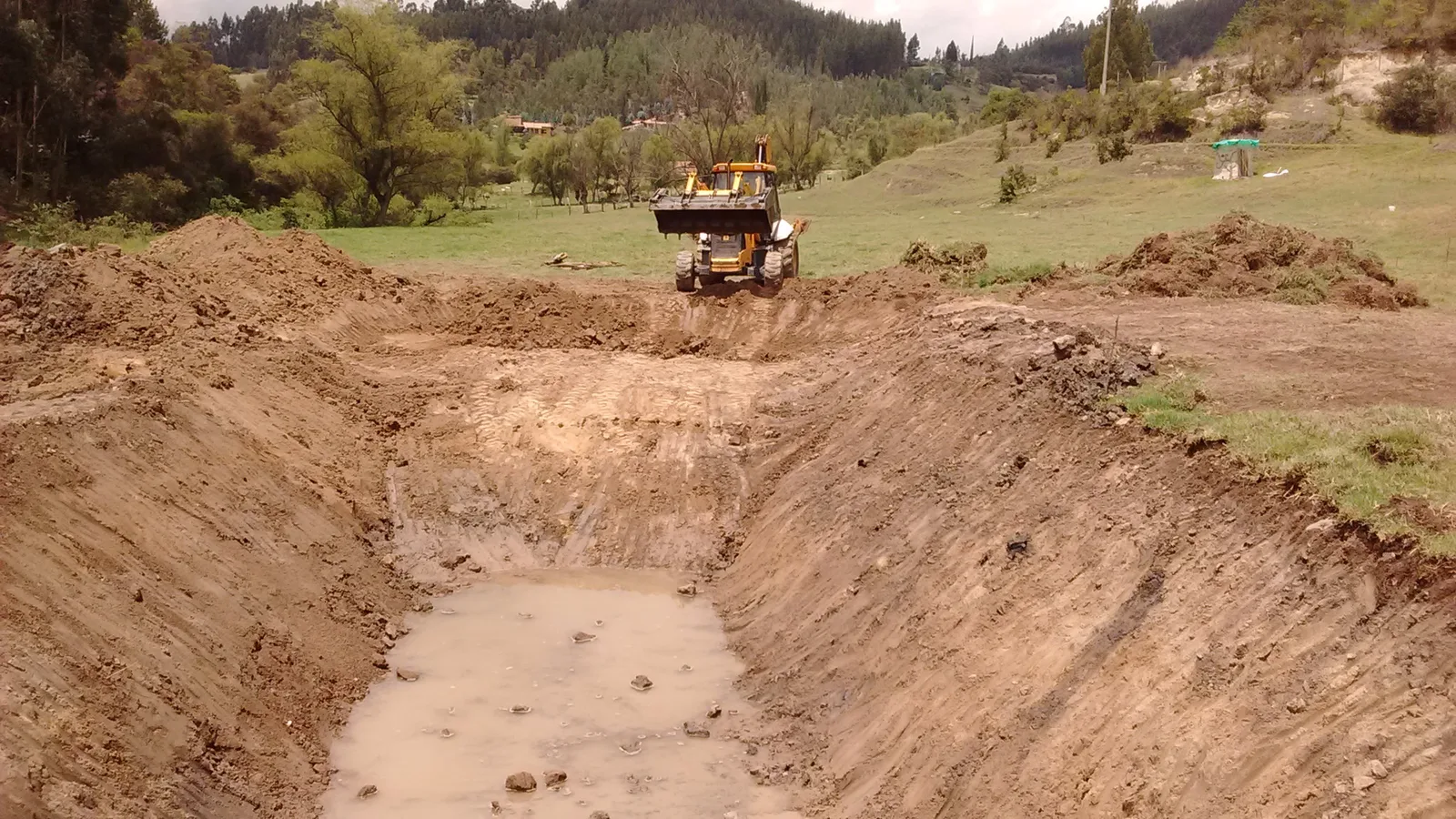
Old tanks are a different job. Years of runoff carry silt in and the bottom fills. What was eight feet deep is now three. We drain or wait for a dry spell, then dig the silt out and haul it off or spread it. Banks that have sloughed in get rebuilt and packed. While the machine is on the place we can raise the levee or fix the spillway. Cleaning an old tank usually costs less than digging a new one. The hole is already there and the location already works for the herd.
The clay under El Campo is what makes ponds work here. It is heavy, tight ground that water moves through slowly. Rice farmers have used that for a hundred years, flooding fields that hold. The same ground holds a pond. We still dig test holes before we commit to a location. Sand lenses and old channel deposits show up in river country, and water leaves through those. Finding one before we dig the whole tank saves a lot of money. If we hit sand, we can move the hole or line the bottom with clay from elsewhere on the place.
Heavy clay digs different than sand. It comes out in slabs and it is hard on a small machine. Wet, it sticks to everything and slows loading down. That is one reason we run big excavators on pond work. A 50,000 pound machine has the reach and the breakout force to keep production up. Season matters too. Late summer and fall usually give the driest window in Wharton County. We can dig in wetter months, but the spoil handles worse and the trucks need more road. If your timeline is flexible, we will tell you which window is better.
A one-acre pond eight feet deep moves thousands of yards of dirt. That dirt has to land somewhere. On most places we put it to work instead of hauling it off. It can build the levee on the low side of the pond. It can raise a house site or a barn pad above the flat. It can build up a road so it stays passable in a wet winter. We shape and pack it as it goes, so it does not settle into a lump later. Planning the spoil at the start is what keeps the pond from costing twice.
Some owners on this prairie want a shallow flat next to the pond. That is a dirt shaping question, and we treat it as one. We can cut a broad, shallow area at the grade you give us and set the banks around it. We can build a low levee so water can be held or let go. What happens with that water after we leave is yours to run. Habitat design and permitting belong to other people. Bring us a grade and a footprint and we will move the dirt to match.
From the first look at the ground to the last pass of the grade, here is exactly how it goes.
We meet you at the property and read the job off the ground itself: what is growing, where water sits, how trucks and excavators get in. Big dirt work prices off what is really out there.
You get a free quote with a real number and a real plan: what gets dug or cleared, how many loads move, where the dirt comes from or goes. It holds unless the scope changes.
The equipment shows up when we said. Excavators dig, trucks run in rotation, and on deadline jobs we run shifts around the clock until the volume is moved.
The last pass matters as much as the first load. Pads compacted and holding elevation, ponds shaped and ready for water, ground graded so it drains. We look at the finished work with you before we leave.
What El Campo property owners ask us most about ponds & lakes. Don't see yours? Give us a call — we're happy to help.
A pond you have been putting off, a pad that needs building, land that needs clearing, or a job that needs truckloads of select fill? Call or send the form. Tell us where the property is and what you want the land to do, and we will set a time to come look at it.
Tell us about your project — we’ll get right back to you.