Serving El Campo, TX
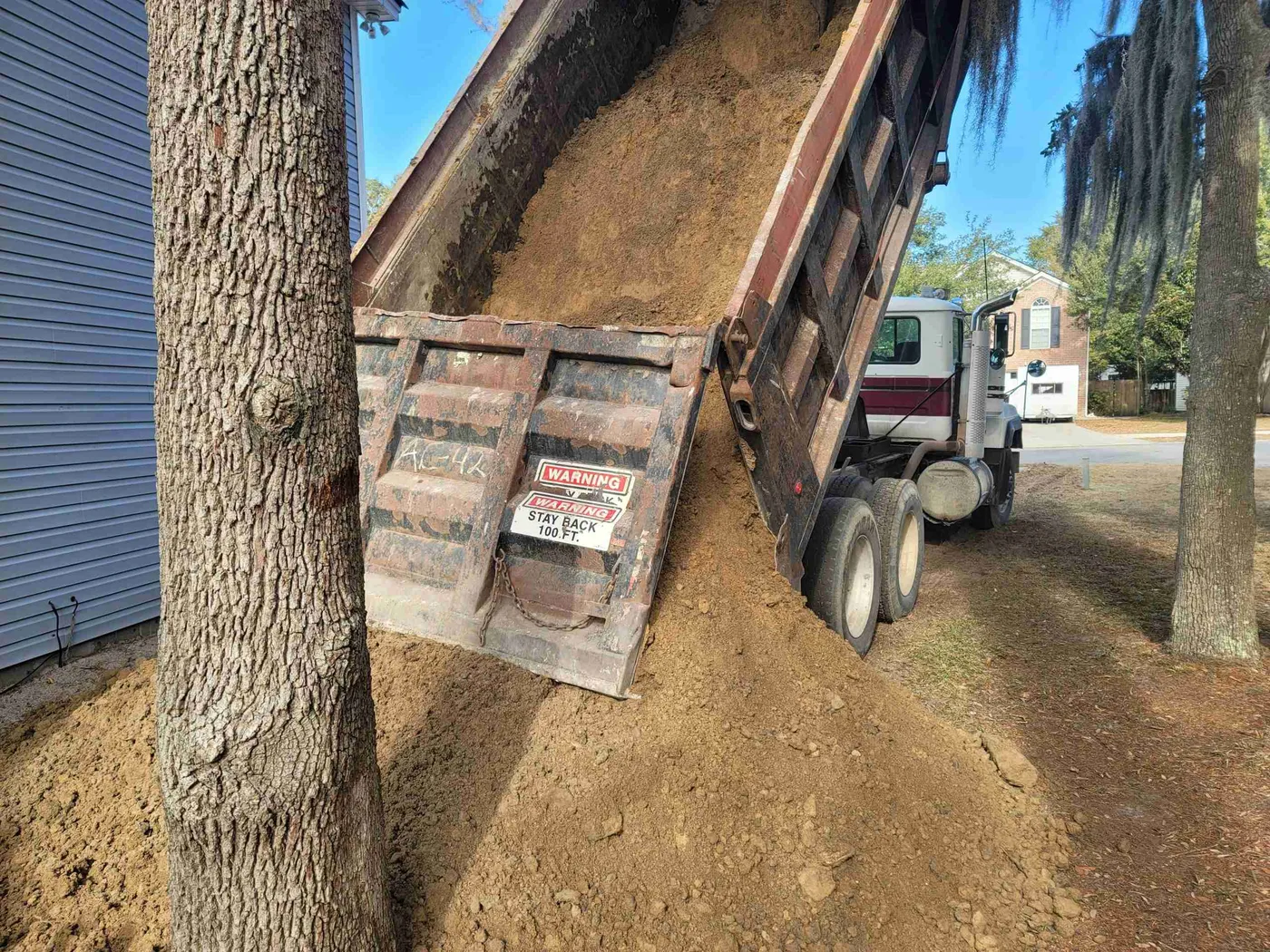
RLS Land Solutions sells and hauls fill dirt to El Campo. We own two sand and dirt pits in southeast Fort Bend County. That means the material and the trucks are both ours. We load select fill, fill dirt, sand and sandy loam and run it down US 59. El Campo is about 29 miles from the pits. Most of the fill we bring here goes under something. House pads, shop slabs, ag buildings, driveways and lots all need dirt built up first. On flat ground that holds water, that few feet of height does the work. Our jobs start around $10,000, which on dirt is a load count, not a big number.
Select fill is the material most jobs here call for. It is a clay and sand blend that packs tight and holds a shape. Fill dirt is cheaper and goes where volume matters more than compaction. Sand and sandy loam have their own uses, under slabs and around drains and in yards. We can tell you which one fits once you tell us what is going on top. Then we quote it delivered, with the haul included. Load counts and delivery windows come with that number.
Tell us about your project — we’ll get right back to you.
Two pits in southeast Fort Bend County belong to us. We mine them, load them and haul out of them. Most dirt outfits buy their material from a pit and mark it up. Ours comes from our own ground. On a job that takes 300 loads, the difference shows up in the total. It also shows up in supply. When a pit gets busy, brokers wait in line for a loader. We do not, because the loader is ours. That keeps the trucks cycling on a schedule you can build around.
Knowing the pit also means knowing the dirt. We can tell you how a given material packs and how it drains. Select fill out of our pits builds a pad that holds its shape through a wet winter. Fill dirt fills volume where nothing is being built on top. Bank sand goes where water needs somewhere to move. If your engineer or builder specified a material, bring us the spec. If nobody specified one, tell us what is going on top and how tall it needs to be. We will match the material to that.
Dirt is cheap and hauling is not. The load itself is a small part of what you pay. Miles, fuel and driver time make up the rest. From our pits to El Campo is about 29 miles. The last stretch into town is US 59, which carries around 22,000 to 24,000 vehicles a day through Wharton County. It is also being brought up to Interstate 69 standards, and the El Campo stretch already meets them. A wide four-lane run means our tandems cycle faster. Faster cycles mean more loads a day and a lower cost per yard.
The last few miles are the ones that need a plan. Off 59 the material goes onto FM roads and county roads to reach the place. Some of those are narrow, with soft shoulders and shallow ditches. A loaded tandem is heavy, and wet shoulders give way. We look at the approach before the first load rolls. Where the ground is soft we build a temporary road in, or lay base at the gate. That protects your drive and keeps trucks from getting stuck. A stuck truck costs a whole cycle, and on a 300-load job that adds up.
People are usually surprised by the load count. A tandem dump truck carries somewhere around 12 to 14 cubic yards. A 60 by 40 house pad raised two feet is roughly 180 cubic yards before you count the slopes. Slopes add a lot, because a pad has to feather out on all four sides. Call that 15 to 20 loads for a modest house pad. A shop or an ag building with a bigger footprint runs two or three times that. A commercial lot runs into the hundreds. Once we have your dimensions and the height, we can figure it.
Height is the part people get wrong on this prairie. Around El Campo the land is close to level, and water sits where it lands. A pad has to be high enough to shed water and to sit above the ditch grade. Local rules and flood maps can also set a minimum. Check those before you order dirt, because raising a pad after the slab is poured is not an option. We would rather bring one extra day of loads at the start. Building the pad tall enough the first time costs less than fixing it later.
Free, no-obligation estimates throughout Wharton County.
(281) 750-6510From the first look at the ground to the last pass of the grade, here is exactly how it goes.
We meet you at the property and read the job off the ground itself: what is growing, where water sits, how trucks and excavators get in. Big dirt work prices off what is really out there.
You get a free quote with a real number and a real plan: what gets dug or cleared, how many loads move, where the dirt comes from or goes. It holds unless the scope changes.
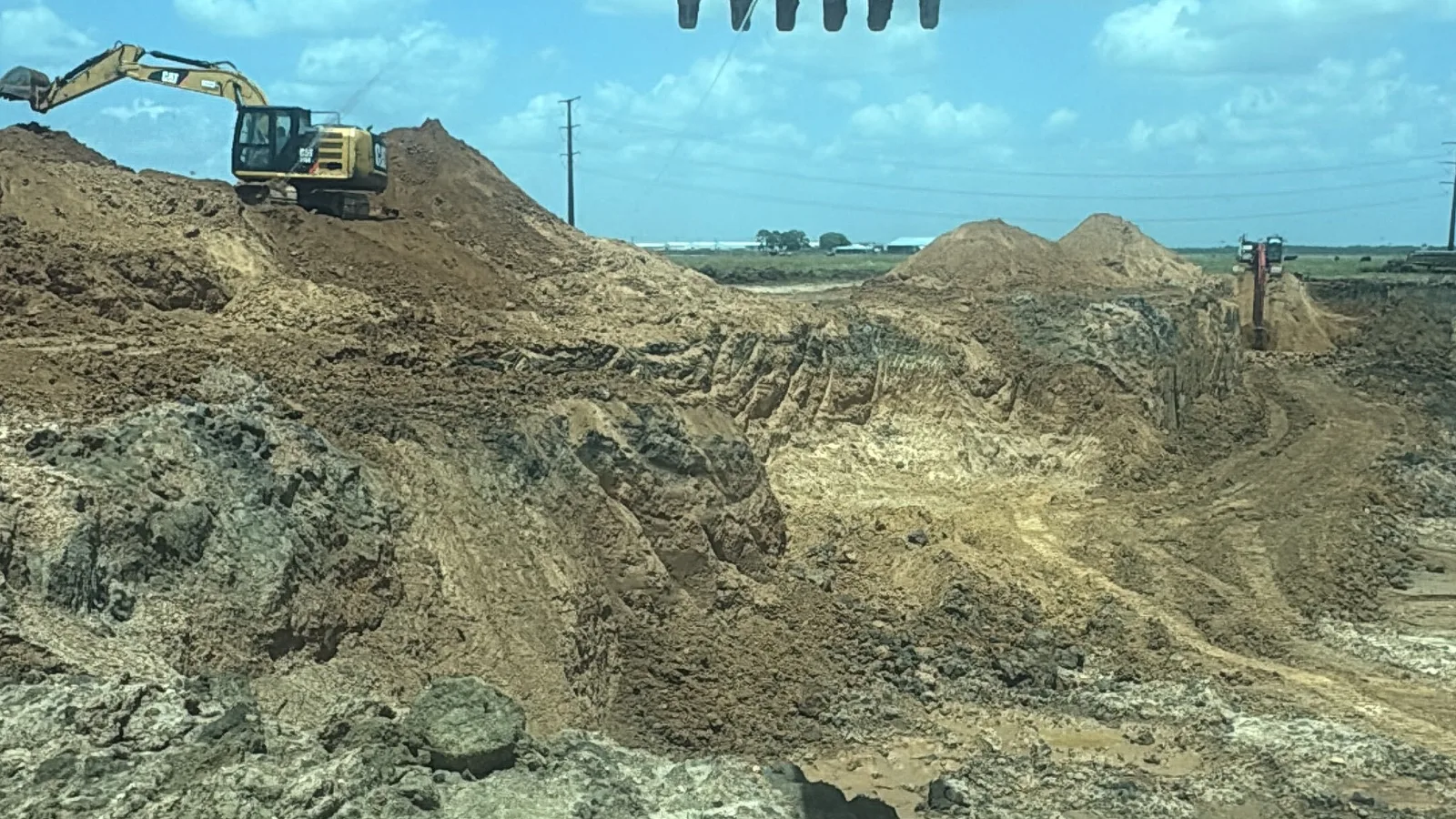
The equipment shows up when we said. Excavators dig, trucks run in rotation, and on deadline jobs we run shifts around the clock until the volume is moved.
The last pass matters as much as the first load. Pads compacted and holding elevation, ponds shaped and ready for water, ground graded so it drains. We look at the finished work with you before we leave.
What El Campo property owners ask us most about select fill & dirt sales. Don't see yours? Give us a call — we're happy to help.
A pond you have been putting off, a pad that needs building, land that needs clearing, or a job that needs truckloads of select fill? Call or send the form. Tell us where the property is and what you want the land to do, and we will set a time to come look at it.
Tell us about your project — we’ll get right back to you.