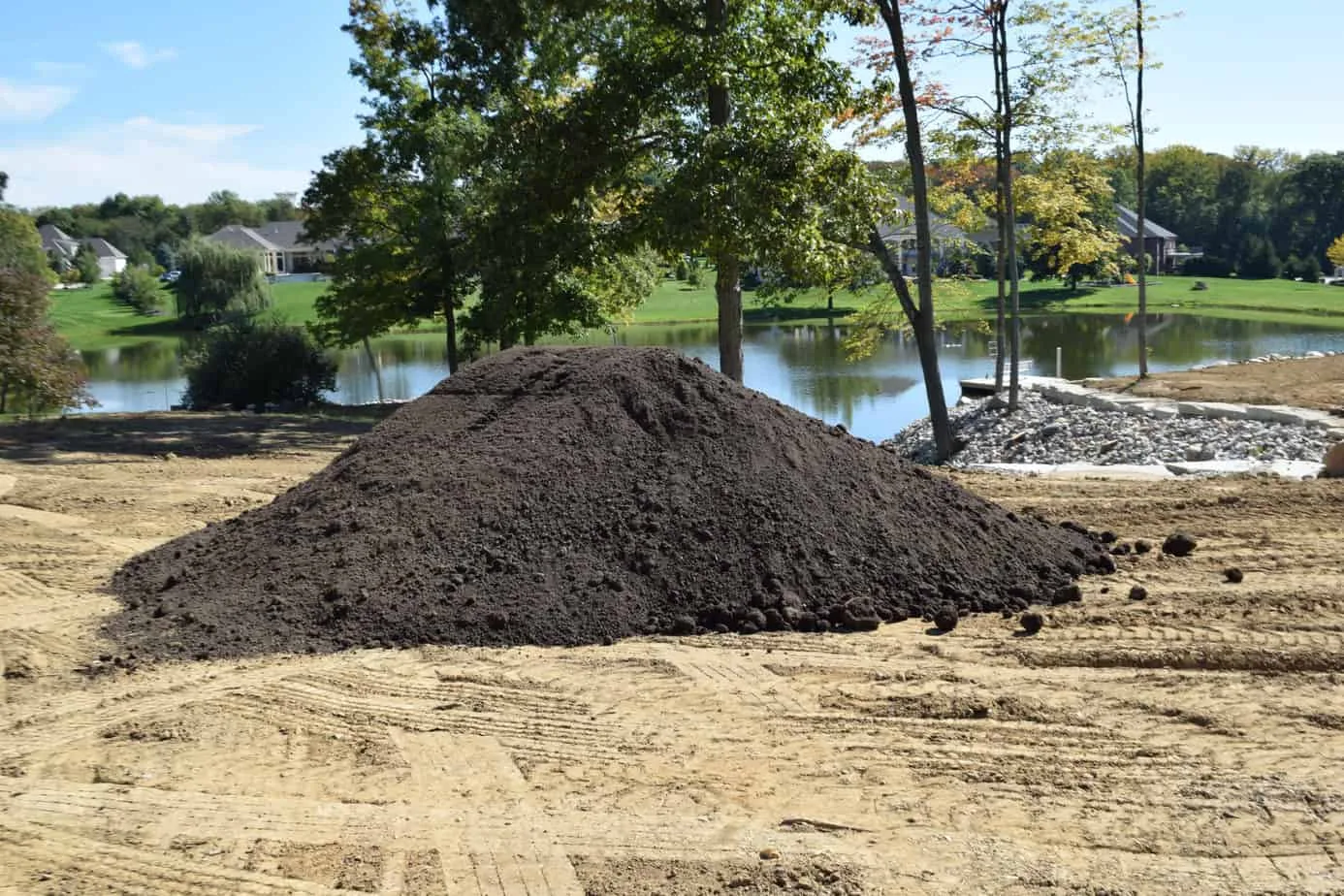
Select Fill vs Bank Sand vs Topsoil: Which One Does Your Project Need?
Order the wrong dirt and you pay for it twice: once for the load and again for the do-over. The materials on a Gulf Coast price list have specific jobs. Select fill goes under things that carry weight. Bank sand fills, beds and levels. Common fill builds volume. Topsoil grows grass and does nothing else well. Here is the whole ladder in one place.
We dig select fill, sand and fill dirt at our own pits in southeast Fort Bend County and sell them through our select fill and dirt sales service, so these are the definitions we work by every day.
What is each material, in one line?
| Material | What it is | Its job |
|---|---|---|
| Select fill | Sand and clay mixed to pass a plasticity spec | Under slabs, pads and pavement |
| Bank sand | Unwashed sand with some clay and silt | Backfill, bedding, leveling, base under grass |
| Common fill dirt | Subsoil with no spec behind it | Raising grade, filling low spots, bulk volume |
| Sandy loam | Sandy fill with fines; grass grows in it | Yard leveling and grading where turf follows |
| Topsoil | The stripped organic surface layer | The top 4 to 6 inches, for planting |
One wrinkle worth knowing: the names vary by supplier. Some yards around the coast do not sell anything labeled “bank sand” at all and call the same material fill sand or yard sand, and at least one Houston supplier classifies its bank sand as a sandy loam. Ask what is in the material, not just what it is called.
When does a job need select fill?
When an engineer says so, which around Houston is any time concrete carries load. Select fill is dug from the right stratum of a pit and mixed for consistency so it passes plasticity testing, then placed in thin compacted lifts. Its low-plasticity blend barely moves as moisture changes, which is the whole point on expansive Gulf Coast clay.
The details of the spec, the PI numbers and the compaction routine get their own article: what select fill is and why builders require it. The short version for a buyer: if the plans mention a building pad or a foundation, price select fill, because common fill will not pass the test.
One caution from the field: bulk clay can build up the body of a road bed or raise a pad area, but the load-bearing layer under a slab is its own spec. Do not let anyone sell you “clay is clay.”
What is bank sand actually for?
Bank sand is the utility player. It is sand straight from the bank, unwashed, with a little clay and silt riding along. That small clay fraction is a feature: the material firms up when worked, levels cleanly, and still drains.
Around here it goes into trench backfill, pipe bedding, filling and smoothing low yards, and base work before sod. Grass grows well in it, which is why it shows up under lawns all over the Houston area. What it is not: an engineered structural fill. If a spec calls for compaction testing, you are back in select fill territory.
Why topsoil is the wrong fill, and not the cheap one either
The instinct to bury topsoil under a project fails on two counts.
The engineering count: topsoil is 2 to 10 percent organic matter, and organics decompose. Buried organics leave voids, the ground settles unevenly over years, and slabs and pads crack long after everyone went home. Specs exclude organic material from structural fill for exactly this reason.
The money count is the surprise: topsoil is usually the most expensive material on the list, not the cheapest. Around Houston, screened topsoil commonly runs several times the per-yard price of fill dirt, because it is a processed landscape product with retail demand behind it. Paying premium prices to bury a material that then settles is the worst trade in dirt.
The right pattern is the standard one: build with fill, cap with 4 to 6 inches of topsoil where anything needs to grow.
How the prices ladder up
Exact numbers move with diesel and haul distance, but the order holds across the Houston market: common fill cheapest, then sandy fills and bank sand, then select fill, with screened topsoil at the top. On volume work the trucking often costs as much as the material, so where the pit sits matters as much as the price per yard. Our full breakdown of per-yard, per-ton and per-load pricing is in the Houston fill dirt cost guide.
Ordering without the guesswork
Tell us what the ground needs to do, and we will tell you what to load. Building pad to an engineer’s spec, sand for a wet trench line, five hundred loads of fill to raise a tract, or a topsoil cap to finish it: the material comes off our own pits, rides our own tandem trucks, and shows up when the schedule says. Call (281) 750-6510 with the job and we will put a number on the loads.