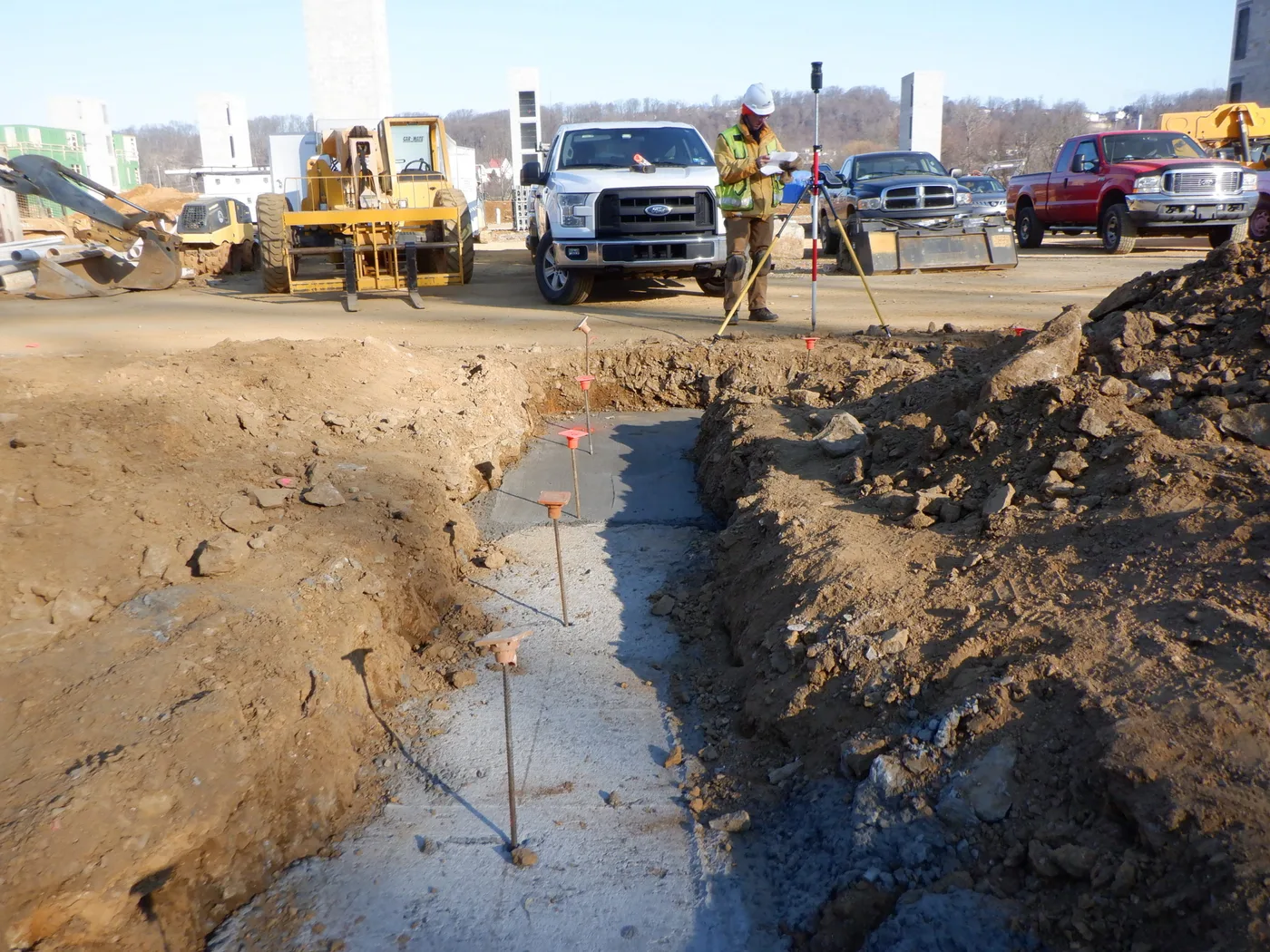
How Much Does a House Pad Cost in the Houston Area?
A house pad around Houston usually lands somewhere between $4,500 and $12,000 for a typical home footprint, and the range is wide because two numbers drive it: how many yards of select fill the pad needs and how far every truckload has to travel. First, one clarification: this article prices the compacted dirt pad the house sits on. The concrete slab on top is a separate trade and a separate bill.
Pads are core work for our site prep and building pads crew, and the fill comes off our own pits, so here is the honest math from the supply side.
How much dirt does a real house pad take?
More than the house footprint suggests, because a pad built right is bigger than the slab. Standard practice runs the pad top a few feet past the slab on every side and slopes the shoulders so they hold.
Here is the math on a typical pad. Your engineer’s number will differ, and this is arithmetic from the stated dimensions, not a quote. Take a 60 by 40 slab, extend the pad top 5 feet each way, build 2 feet of compacted height with 3-to-1 side slopes:
| Piece of the pad | Volume |
|---|---|
| Pad core, 70 by 50 at 2 ft compacted | about 259 cubic yards |
| Sloped shoulders and corners | about 56 cubic yards |
| Total compacted | about 315 cubic yards |
| Loose yards to order (25 to 30 percent shrink) | about 400 cubic yards |
| Tandem truckloads at ~12 yards | 33 to 34 loads |
Four hundred yards and thirty-plus loads for one ordinary house pad. That number surprises people, and it is the reason pad quotes look the way they do. It is also why pad work belongs to outfits set up for volume trucking rather than a landscape trailer.
What does the fill itself cost?
Houston-area select fill prices run roughly $8 to $15 per cubic yard for basic clay-based blends at the pit end of the market, with sandier blends and retail yards posting $12 to $24. On 400 loose yards, the material alone is somewhere between about $3,200 and $9,800.
Then comes the half of the bill people forget: trucking. One published Houston worked example on a 1,000-yard job split almost exactly 50/50 between material and delivery. Delivery fees commonly run $50 to $200 per truckload, and every mile between the pit and your site is on the meter. This is where geography is money. Our pits sit in southeast Fort Bend County and our own tandem fleet does the hauling, so for pads from Richmond down through Needville, Rosharon and the river counties, the haul stays short and the middle of the bill drops out. The material side of that story is covered in our guide to what select fill is.
Why do Houston pads get built up at all?
Three stacked reasons. The coastal prairie is flat, so water sits instead of running off, and a slab at natural grade sits in it. The native clay is expansive, swelling wet and shrinking dry, and building codes flag soil as expansive right where Gulf Coast clay lives, so engineers cap it with stable low-plasticity fill. And in mapped flood zones, elevation is law: Fort Bend County’s floodplain rules, updated effective October 2024, require the lowest floor in a Special Flood Hazard Area to sit at least 2 feet above the base flood elevation, with a list of other minimums that can push it higher. The pad is how a slab gets to that height.
The Fort Bend rule almost nobody knows
Here is a locally specific trap worth knowing before you order dirt in Fort Bend County: bring in more than 500 cubic yards of fill per acre and county rules require a drainage plan prepared by a licensed engineer and approved by the drainage district.
Spread over a full acre, 500 yards is less than 4 inches of height. In other words, “just raising the place a little” can cross into engineered-plan territory faster than most landowners expect. There are also fill setbacks from property lines and slope limits, and inside the flood zone, fill that displaces floodplain storage must be offset with mitigation volume. None of this makes a pad hard to build. It makes winging it expensive. We work inside these rules on every Fort Bend pad job.
What “compacted to spec” actually means
A pad is not a pile. The footprint gets cleared and stripped, the subgrade recompacted, and then the fill goes down in 8 to 12 inch loose lifts, each one compacted to roughly 95 to 98 percent of maximum dry density at the right moisture and tested before the next lift lands. Built that way, the pad holds elevation and the soils engineer signs off. Dumped loose and shaped once, the same yards settle for years, which is where cracked slabs come from.
Getting a real number
Ranges tell you the shape of the cost: a few thousand in material, roughly as much again in trucking, plus the machine work of clearing, spreading and compacting, with site conditions and pad height moving the total. The real number comes from the site, the engineer’s pad spec and the load count.
If the pad is going in anywhere southwest of Houston, call (281) 750-6510 or send the form. We will look at the site, run the volume, and quote the pad from cleared ground to tested grade with the fill and trucking already ours.