Serving Richmond, TX
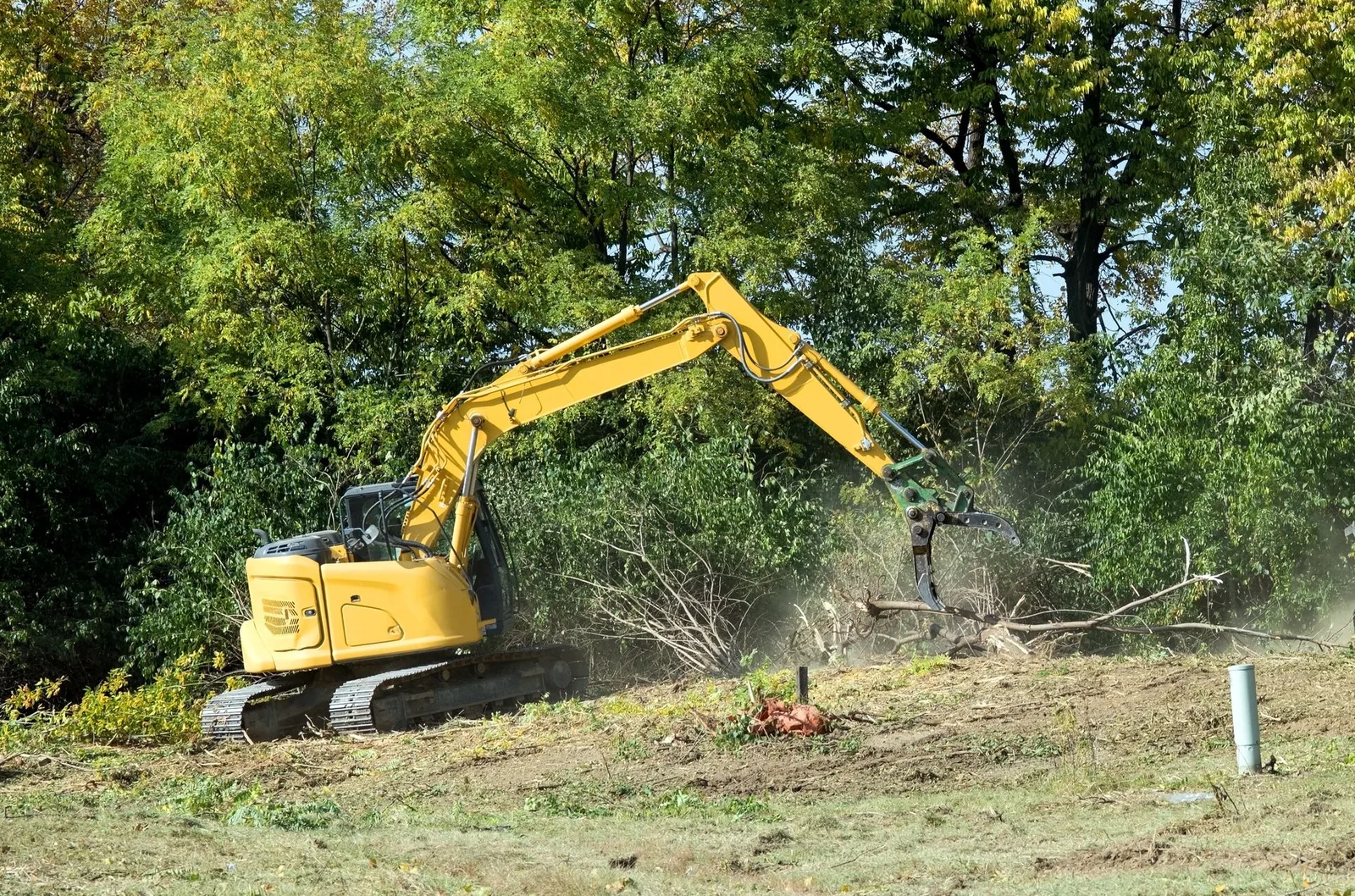
Land clearing in Richmond, Texas means brush, scrub trees and old fence lines on acreage. Along the Brazos bottoms it also means Chinese tallow, yaupon and elm under bigger timber. We clear it with large excavators and dozer-class equipment. Trees and brush get pushed out or dug out at the root, then loaded and hauled off. Our smallest excavator weighs 50,000 pounds, so heavy growth does not stall the day. Debris goes to a green waste dump site we own. That matters here because outdoor burning is restricted in unincorporated Fort Bend County. Most Richmond tracts we clear run from a few acres up to several hundred.
Richmond sits in the middle of a county that keeps building. Tracts that sat in pasture or brush for decades are getting cleared for subdivisions and commercial pads. We have done that work at scale, including solar farm sites covering thousands of acres. The same equipment shows up for a 20 acre ranch tract off FM 762. Our minimum project runs about $10,000, which fits acreage work. Clearing usually runs into grading and fill. We handle both in the same mobilization.
Tell us about your project — we’ll get right back to you.
The Brazos bottoms east and south of Richmond grow back fast. Sugarberry, cedar elm and Chinese tallow fill in under the older pecan and oak. Underneath that you get yaupon and vine, thick enough that you cannot see far. Clearing bottomland takes weight, because the ground stays soft and root balls are big. We work it with tracked excavators that sit on wet ground and still pull a tree out whole. Push a tallow over and leave the stump, and it comes right back. We pull the root, shake the dirt off and load it.
Wet ground changes the schedule more than anything else in Richmond. After a heavy week the bottoms will not hold a loaded truck. We plan bottomland clearing around dry stretches, and we build a haul road first when we have to. Base rock in the right place keeps the tandems moving instead of cutting ruts. If a job runs into a wet spell, we shift to the higher ground on the same tract. Being open 24 hours helps, because a dry window gets used up fast. That is how we keep an acreage clearing job on its date.
Around Richmond, raw acreage keeps turning into rooftops and commercial pads. The Grand Parkway corridor west of town and the FM 762 side south of town are both moving. Before any of that happens, somebody has to take the brush and trees off. We clear to the survey line, grub the roots and leave ground a dozer can shape. Builders care about two things on clearing, the date and what is left behind. We clear to a schedule and haul the debris out on our own trucks. Nothing sits in piles waiting on a subcontractor with one truck.
Clearing a development tract is different from clearing pasture. There are usually easements, existing ditches and a drainage plan to work around. We keep the survey stakes and leave marked trees standing. On bigger Richmond tracts we run more than one machine. Debris gets staged in piles the trucks can reach. Then the tract goes straight into pad work, since the equipment is already there. Doing both under one contract saves a second mobilization. On hundreds of acres that is real money. We price clearing and site work together when a builder wants one number.
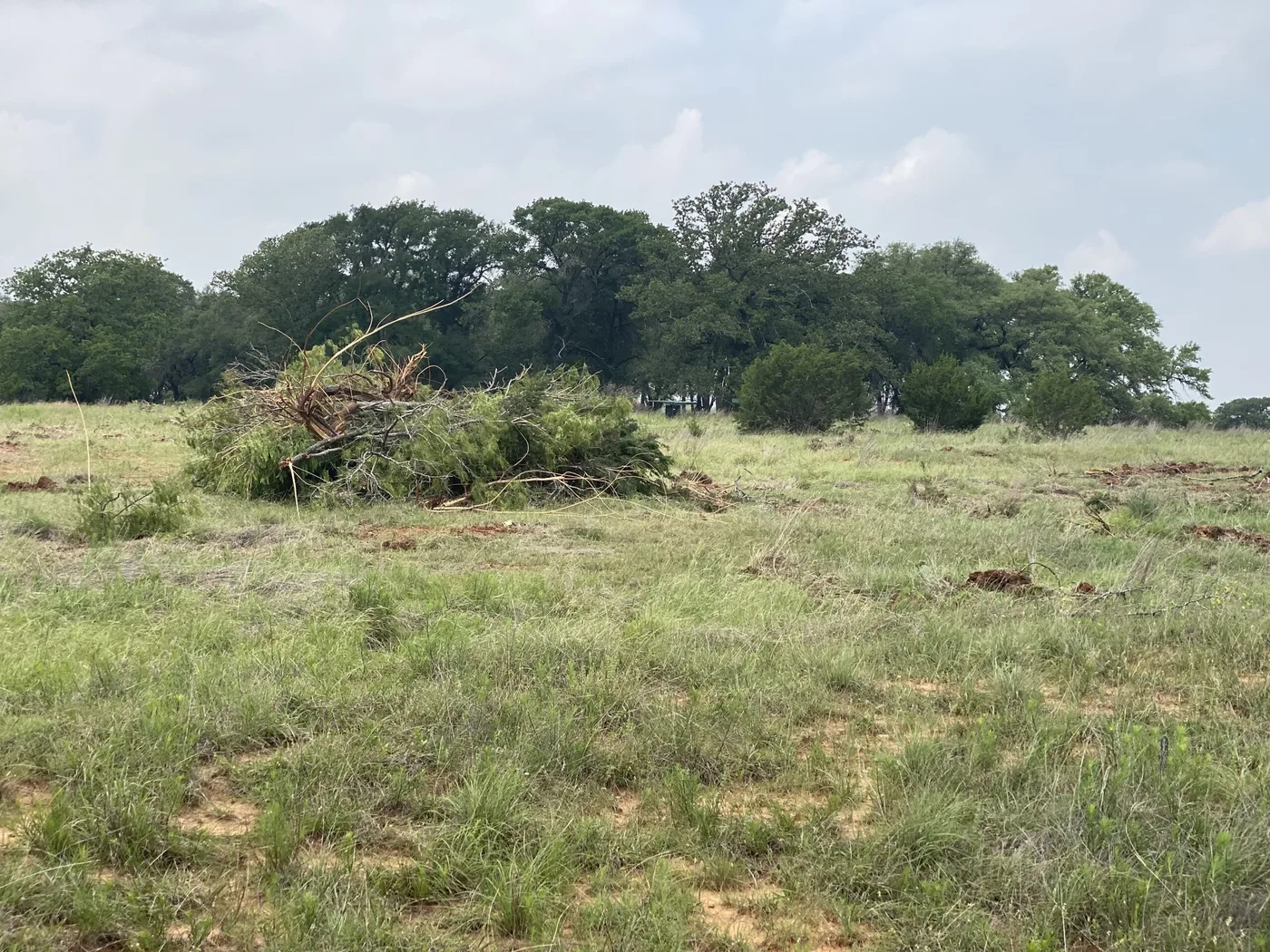
Plenty of Richmond area clearing has nothing to do with a subdivision. A ranch owner off FM 762 or out toward Thompsons wants his fence lines opened up. Brush creeps into a pasture a few feet a year until the fence is buried. We run the line with an excavator, pull the growth and stack it for the trucks. Pasture reclamation works the same way. Tallow and brush take over grass that used to feed cattle. Clearing that ground back to grass raises what the place can carry. Jobs like these usually run from ten acres up.
Underbrush clearing is its own request around Richmond. Owners want the big pecans and oaks left standing with everything else pulled out from under them. That takes an operator who can work a thumb around a trunk without barking it. We do it with the same large excavators, just slower and with more care. The cleared ground drains better and you can drive a truck through it. Cleared debris leaves on our trucks and goes to our green waste site. Burning is restricted in unincorporated Fort Bend County, so haul-off is the route that works.
Free, no-obligation estimates throughout Fort Bend County.
(281) 750-6510From the first look at the ground to the last pass of the grade, here is exactly how it goes.
We meet you at the property and read the job off the ground itself: what is growing, where water sits, how trucks and excavators get in. Big dirt work prices off what is really out there.
You get a free quote with a real number and a real plan: what gets dug or cleared, how many loads move, where the dirt comes from or goes. It holds unless the scope changes.
The equipment shows up when we said. Excavators dig, trucks run in rotation, and on deadline jobs we run shifts around the clock until the volume is moved.
The last pass matters as much as the first load. Pads compacted and holding elevation, ponds shaped and ready for water, ground graded so it drains. We look at the finished work with you before we leave.
What Richmond property owners ask us most about land clearing. Don't see yours? Give us a call — we're happy to help.
A pond you have been putting off, a pad that needs building, land that needs clearing, or a job that needs truckloads of select fill? Call or send the form. Tell us where the property is and what you want the land to do, and we will set a time to come look at it.
Tell us about your project — we’ll get right back to you.