How Much Does a Gravel Driveway Cost in Texas?
Gravel driveway cost in Texas runs about $1 to $10 per square foot installed. Published cost guides land at different spots inside that band. HomeGuide puts an installed drive at $4 to $10 per square foot. LawnStarter prices the same work at $1 to $3.
Why the gap? The guides are pricing different jobs. We build gravel driveways built for acreage out of Needville. Those are long lanes running from the county road back to a house pad, a barn or a gate.
The per-foot math below is written for that kind of drive. A short suburban drive is a different job. Our project minimum is about $10,000, which on driveway work means a long lane.
What does a gravel driveway cost by length?
Most acreage drives get built 12 feet wide. That width lets a pickup and a trailer pass a parked truck. The table runs the published $1 to $10 per square foot range out by length. The math is ours, and the per-foot rates come from the national cost guides.
| Drive length at 12 feet wide | Square feet | At $1 per square foot | At $10 per square foot |
|---|---|---|---|
| 100 feet | 1,200 | $1,200 | $12,000 |
| 200 feet | 2,400 | $2,400 | $24,000 |
| 500 feet | 6,000 | $6,000 | $60,000 |
| 1,000 feet | 12,000 | $12,000 | $120,000 |
| 1,320 feet, a quarter mile | 15,840 | $15,840 | $158,400 |
A ten times spread is not much use on its own. Read it this way instead. A light drive over firm ground sits near the bottom. A lane cut, built up and rolled deep enough for loaded tandems sits near the top.
Width moves the total as hard as length does. Drop that 1,000 foot lane to 10 feet wide and it covers 10,000 square feet. Take it to 16 feet so equipment can pass and it covers 16,000. Same rate per square foot, and the total climbs 60 percent.
What moves the number on gumbo clay?
The price starts with the subgrade, not the rock. Soft topsoil comes off and the driving lane gets cut to grade. Low ground gets built up with select fill and fill dirt from our pits. Rock laid on soft clay presses in and disappears.
Gumbo clay is the reason that step is not optional. It goes slick and soft when it takes on water, then hard and cracked when it dries. Rock has to ride on a cut, shaped and compacted lane instead of on wet clay.
Base depth is the next lever. Every extra inch across a 1,000 foot lane is roughly 50 more tons of material. Depth also sets how the drive behaves under a loaded trailer.
Shape costs money too. We crown the center so rain runs off to the sides. Ditches and turnouts carry that water away from the base. Flat coastal prairie gives water nowhere to go on its own.
Haul distance is the quiet one. Base material comes from supplier yards, and every mile rides on a truck. A yard 40 miles out costs more per ton delivered than a yard 15 miles out. We move it on our own tandem dump truck hauling.
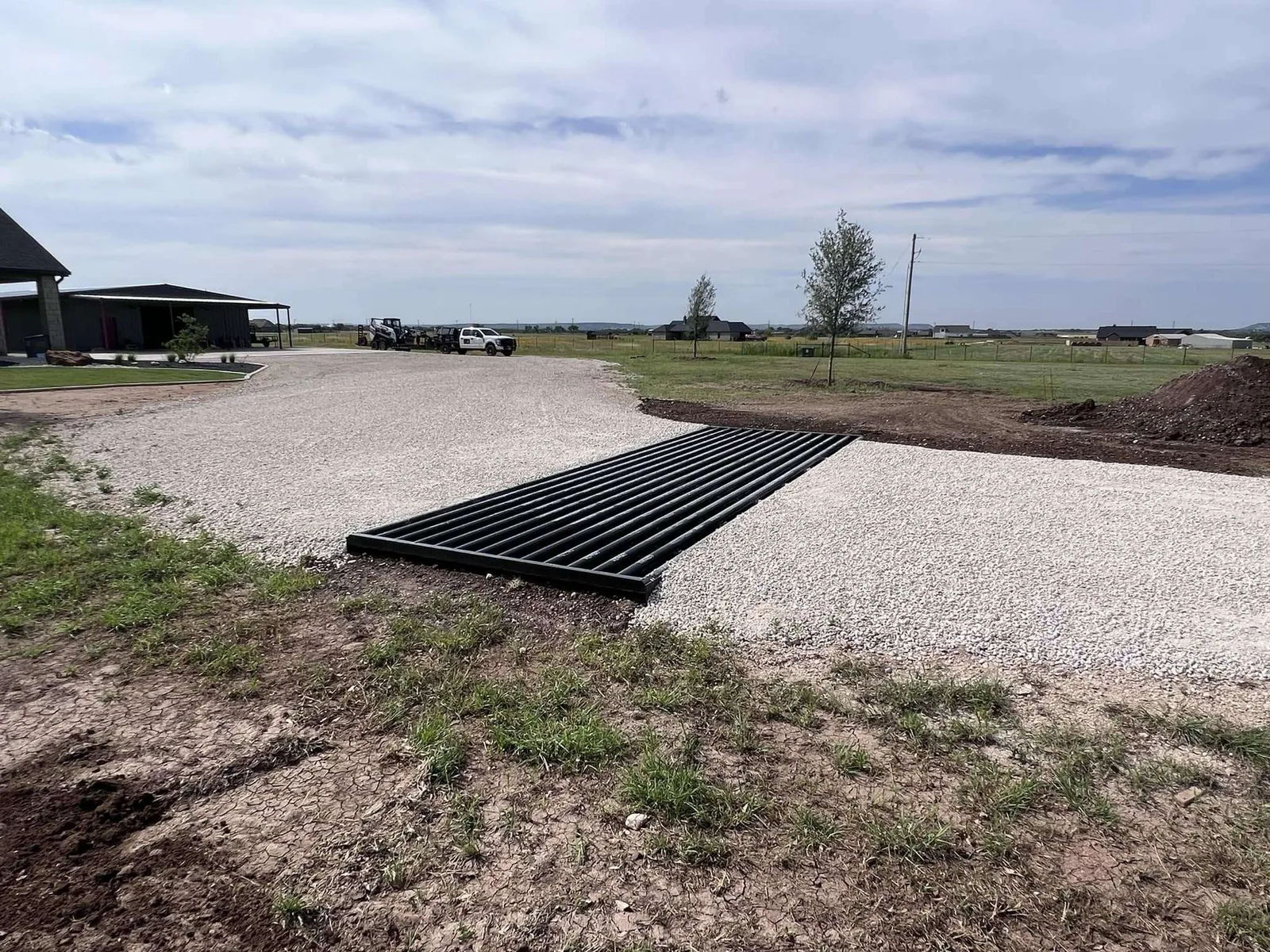
The entrance is its own line item. A culvert and a wider approach at the county road add pipe, dirt and base. Brush and trees crowding the road often need land clearing on acreage before the lane gets cut.
Long lanes price better per foot than short ones. Moving heavy equipment to the property costs about the same for 200 feet or 2,000. That setup cost spreads thin across a quarter mile.
Which rock belongs on a Texas acreage drive?
Three materials do most of the driveway work on Gulf Coast gumbo clay. Crushed concrete costs the least and locks up hard once it is rolled. Crushed limestone, sold as flex base, gives the tighter and cleaner driving surface. Caliche binds well under compaction, though it softens in long wet spells.
Angi puts crushed limestone at $30 to $40 per ton and caliche at $30 to $100 per ton. Angi also puts crushed concrete as low as $0.60 per square foot. Houston-area supplier price lists run higher once delivery rides along. One list quotes crushed concrete road base at $63.67 per ton and flex base at $72.50 per ton, delivered.
Most acreage lanes end up as two materials stacked. Crushed concrete goes in thick as the base course because it is the cheapest way to build a section. Limestone base tops it where the drive has to look finished and shed water. Caliche does both jobs on lighter drives.
Traffic picks the material. A drive that sees a pickup and a UTV can run caliche or crushed concrete. A drive that sees loaded tandems and equipment trailers wants limestone base on top. Our post on road base options for Texas properties compares them in more detail.
How deep should the base be?
HomeGuide puts the minimum recommended depth for a gravel driveway at 5 to 6 inches, installed in layers. LawnStarter calls for at least 4 inches and recommends 8 to 12. The guides agree on the part that matters out here. Drives carrying trucks or RVs want at least 8 to 12 inches.
Depth only pays off when the base goes down in lifts. Each lift gets spread to depth and rolled tight before the next one. That is how the section locks up under weight. The same method builds our ranch roads and pit access roads.
Do you need a permit for a new driveway entrance?
A new driveway connection to a public road goes through the county or the state. In Fort Bend County, home drives on open-ditch roads go to Road and Bridge for the permit and a basic gravel connection, and other connections to county roads need a driveway permit. Brazoria County requires a driveway and culvert permit whenever a driveway and culvert go in new or get changed, and the county sets residential culverts itself. Off a farm-to-market road, TxDOT permits the access driveway.
Is a gravel driveway cheaper than concrete?
Yes, and the gap widens with every hundred feet. Bob Vila puts a poured concrete driveway at $4 to $15 per square foot, materials and labor. The typical concrete driveway total runs $1,800 to $6,000.
That total covers a short suburban drive. A quarter mile of ranch lane runs far past it. Run the same 12 foot by 1,000 foot lane both ways.
Concrete at $4 to $15 per square foot comes to $48,000 to $180,000. Gravel at $1 to $10 per square foot covers the same lane for $12,000 to $120,000. Concrete does last longer, at 30 to 40 years.
How much does one ton of gravel cover?
Coverage falls as depth rises. Published supplier figures put one ton of #57 stone at about 120 square feet at 2 inches deep. At 3 inches the same ton covers roughly 80 square feet. At 4 inches it covers about 60 square feet.
Now put that against a ranch lane. A 12 foot by 1,000 foot drive is 12,000 square feet. At 4 inches that is about 200 tons of rock. Take the base to 8 inches and it doubles, which is why long drives move in tandem loads.
What are the cons of a gravel driveway?
A gravel driveway asks for upkeep. The top course loses rock to tires and hard rain. It wants regrading and fresh material every few years. LawnStarter lists dust as a drawback, since driving on gravel puts dust and debris in the air.
Water is the other one. A lane with no crown and no ditch holds rain, then ruts under tires. LawnStarter notes that a drive left unmaintained can turn into an eyesore. Repairs stay simple on gravel: add rock, reshape, roll.
Getting a number for your drive
The ranges above frame the job. A firm price comes from seeing the site. Length and width move it most. How soft the subgrade sits and how far the rock has to ride move it next.
The entrance is the last piece, and it depends on the county. If the property sits southwest of Houston, call (281) 750-6510. We will price the lane from the county road to the pad.